

If you’ve been following my blog for a while, you’ve already worked on building your brand using my comprehensive step-by-step guide. Now, I will discuss the concept of brand equity and how you can use it to improve your brand and get more clients or customers.
In 2024, I’ve had the privilege of teaching in the Fine Arts program at the University of San Carlos, specifically within the Advertising Arts department. One of the subjects I taught was advertising theories and their practical applications.
As the semester wrapped up, I was inspired to adapt these lectures into blog posts designed to provide value to my freelance and small business owner audience.
In this post, I will discuss the following:
- What is Brand Equity? Why is it important?
- Aaker’s Brand Equity Model
- Keller’s Customer-Based Brand Equity (CBBE) Model
- Applying These Theories to Your Business
- Brand Equity Case Studies
- Brand Equity and Why Aaker and Keller’s Models Matter Today
What is Brand Equity? Why is it important?

To understand the impact of brand equity, put yourself in the customers’ shoes for a minute. How do you decide which products to buy? If you were in the supermarket, deciding between an unknown and a known brand, which would you select? Usually, a customer would choose the more trusted or reliable brand. That’s why ads often include phrases like trusted by more moms worldwide or trusted by dentists. Trust is part of the concept called brand equity specifically, the perceived quality component by Aaker and levels 3/4 by Keller. Anyway, I’ll discuss more about that later.
Brand equity is the commercial value based on the market’s perceptions of your brand instead of your products or services. Since we deal with feelings and perceptions, you don’t use the profit margins or annual sales figures to determine brand equity. Brand equity is all about how customers often feel or what they associate with your brand. That’s why you should establish your brand values and really delve into your intents beyond sales figures.
High brand equity means customers recognize your name, trust your expertise, and feel loyal enough to return or recommend you to others. That’s why brands usually manage their reputation through customer service, marketing efforts, and press releases.
For freelancers and small business owners, high brand equity means:
- Being the top-of-mind choice in your niche.
- Commanding higher rates for your services.
- Retaining clients and growing through referrals.
So, how do we get from the starting brand equity to the peak? In this post, I’ll explain the concept of brand equity through two theories: David Aaker’s Brand Equity Model and Kevin Lane Keller’s Customer-Based Brand Equity (CBBE) model. They discuss brand equity in similar contexts but with different applications.

These are the benefits of having high brand equity:
- Higher Rates – clients are willing to pay more for trusted brands.
- Client Retention – loyal clients return, reducing the need to constantly find new ones.
- Market Differentiation – an equitable brand helps you stand out in a crowded marketplace.
- Business Growth – a strong reputation attracts new clients and opens doors for partnerships.
Note: In this post, I may use the terms theory, model, and framework interchangeably because models and frameworks (collection of models) are essentially theories visualized or illustrated through graphics for easier understanding.
Aaker’s Brand Equity Model
Aaker’s model looks at brand equity from a business perspective, identifying the tangible components contributing to a brand’s value, such as awareness and quality perceptions. Before diving into his theory, let me talk about David Aaker and the background behind the theory.
David Aaker
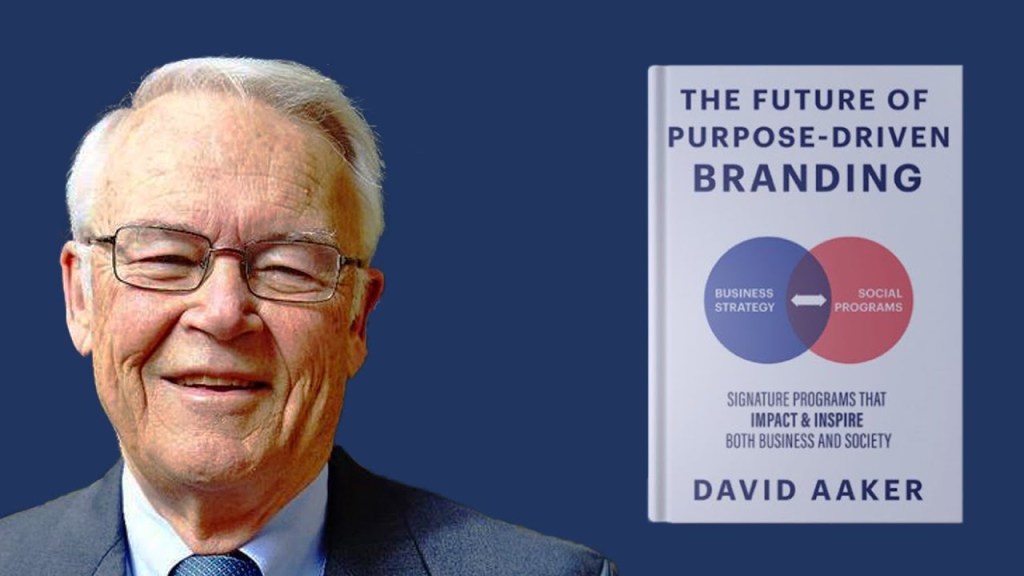
David Aaker, often called the “Father of Modern Branding,” introduced his brand equity model in the early 1990s. His work was a response to the growing realization among marketers that a brand’s value extended far beyond the products or services it represented.
Aaker’s book Managing Brand Equity (1991) outlined his framework, which categorized brand equity into four key components: brand awareness, brand associations, perceived quality, and brand loyalty.
Brand Equity Concept and Components According to David Aaker
Aaker’s model emerged when brands gained emotional and symbolic importance. He sought to create a structured approach for businesses to understand and measure their brands’ intangible value. Aaker provided a blueprint for companies to nurture their brands’ long-term health and profitability by focusing on factors influencing customer perception and loyalty.
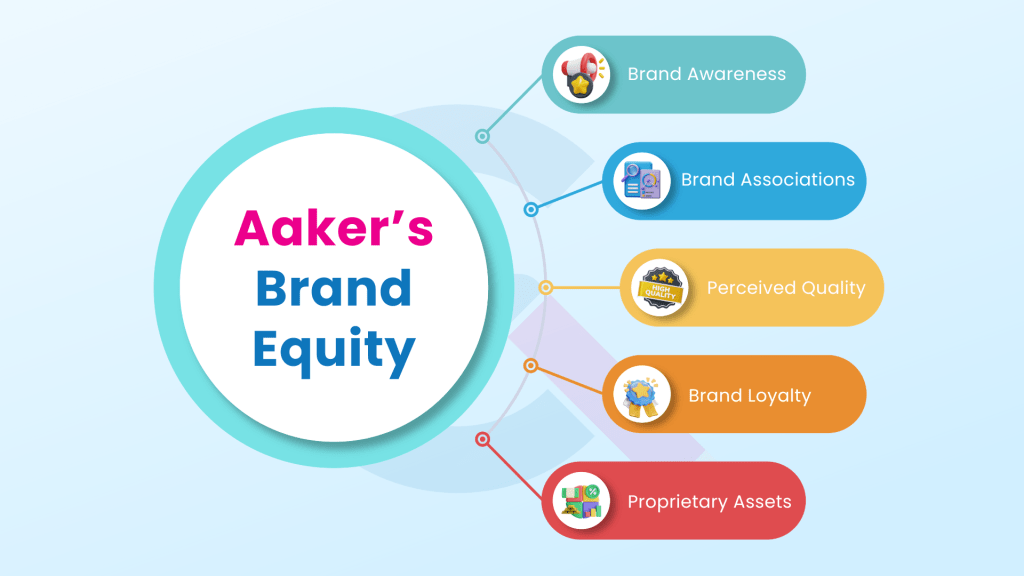
David Aaker’s model breaks brand equity into five key components and I’ve added some actionable points to get you started:
Brand Awareness
Brand awareness is how well your target audience recognizes and remembers your brand. This goes hand-in-hand with how well you have defined your brand, since our audience cannot recognize what you have not clearly defined.
How to build brand awareness:
- Create a professional online presence through a portfolio, social media, and search engine optimized content. If you are a local business, optimize your Google Maps business profile.
- Engage in industry-specific conversations on platforms like LinkedIn or Twitter.
- Use consistent branding elements, such as a logo, tagline and colors.
Brand Associations
Brand associations are the mental and emotional connections clients make with your brand. What do you want the customers to think about when they hear your brand name? Do the customers think of good things or bad?
How to create brand associations:
- Define your niche and stick to it. For example, a freelancer specializing in content for fintech startups creates a stronger association than a generalist writer.
- Align your branding with your values. If you’re eco-conscious, show it in your practices and not just in the marketing materials.
- Choose your partnerships wisely and plan your business strategies carefully.
Perceived Quality
Perceived quality is the impression clients have of your service quality, even before hiring you. This may come from previous experiences with other customers or what they have read or seen about your products/services.
How to establish perceived quality:
- Share testimonials and case studies that highlight your expertise.
- Invest in professional certifications or courses to enhance credibility.
- Deliver consistent, polished work that always aspires to be better every year.
Brand Loyalty
Brand loyalty is the likelihood of clients returning to work with you or referring you to others. This means that a big percentage of your income comes from repeat purchases instead of trial customers.
How to build brand loyalty:
- Provide exceptional client experiences, from communication to deliverables.
- Stay in touch with past clients through newsletters or social media updates.
- Offer incentives for referrals, like discounts on future projects.
Proprietary Assets
Proprietary assets are unique, legally protected elements of your brand, such as trademarks, patents, and copyrights. These assets prevent competitors from imitating or infringing on your brand and create a strong barrier to entry.
For freelancers and small business owners, proprietary assets might include:
- A distinctive logo, slogan, or tagline.
- Trade secrets, processes or methodologies.
- Content or methodologies unique to your services.
How to deal with proprietary assets relative to branding equity:
- Pinpoint what makes your brand, product, or service stand out, such as distinctive features, methodologies, or creative elements.
- Create original assets like logos, branding, content, products, or software that differentiate your business from competitors.
- Register trademarks, copyrights, or patents, and protect trade secrets through legal agreements like NDAs to ensure exclusivity.
- Maintain detailed records of your proprietary assets’ development to establish ownership and strengthen your legal claims.
- Highlight your proprietary assets in marketing efforts to position your brand as innovative and original while building trust and loyalty.
- Regularly audit your assets, enforce your rights, and take legal action if necessary to prevent unauthorized use by competitors.
Keller’s Customer-Based Brand Equity (CBBE) Model
Keller’s model takes a customer-centric approach, analyzing how brands can create meaningful relationships and emotional resonance with their audience referencing Jennifer Aaker’s Dimension of Brand Personality and Changes in Social Values in the United States During the Past Decade study by Kahle et al.
Kevin Keller

Kevin Lane Keller, a marketing professor and researcher, developed his Customer-Based Brand Equity (CBBE) model in 1993. Unlike Aaker, Keller focused on brand equity from the customer’s perspective, emphasizing how consumers perceive and interact with a brand. His seminal paper, Conceptualizing, Measuring, and Managing Customer-Based Brand Equity, introduced the idea that brand equity builds through a hierarchical process. Keller’s model takes the form of a pyramid, with the ultimate goal of achieving brand resonance—deep customer loyalty and engagement.
His paper Building Customer-Based Brand Equity: A Blueprint for Creating Strong Brands outlines the concepts behind branding and its relationship with customers.
Brand Equity Concept and Components According to Kevin Lane Keller
Keller’s model was shaped by the evolving marketing landscape of the 1990s, which increasingly prioritized customer-centric strategies. The rise of relationship marketing and experiential branding highlighted the importance of understanding how customers think and feel about brands. Keller’s framework provided a clear path for businesses to move from creating brand awareness to fostering deep emotional connections and loyalty.
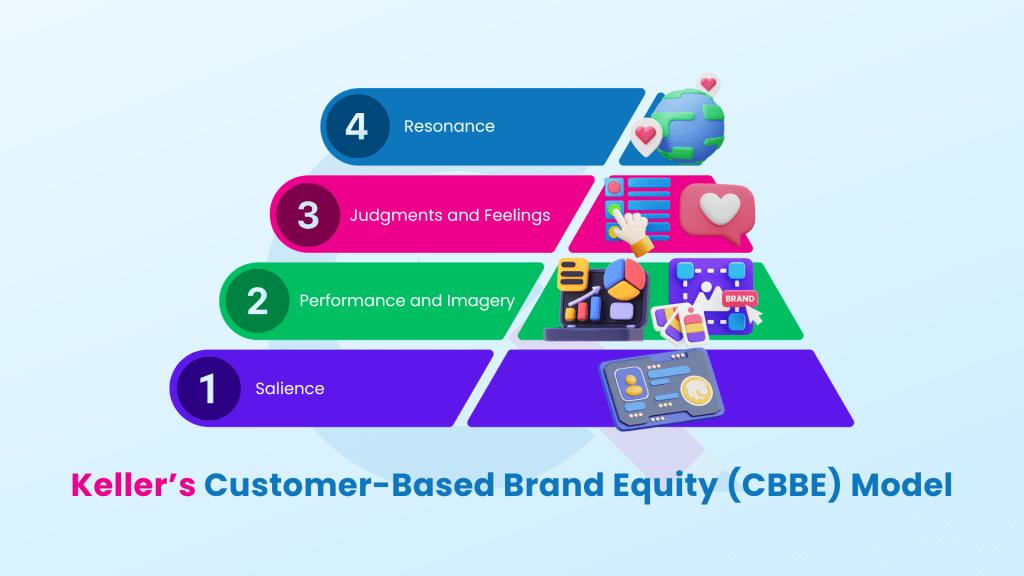
Kevin Lane Keller’s CBBE model focuses on building brand equity from the customer’s perspective. It’s structured like a pyramid, with each level leading to the ultimate goal: brand resonance.
Salience
Level 1 involves Salience or being top-of-mind when clients need your expertise. This is relevant to how the customers perceive your brand equity based on your marketing positioning strategy.
How to build brand salience as freelancer/business owner:
- Regularly showcase your work on relevant platforms like Instagram for designers or Medium for writers.
- Network within your industry to increase visibility.
- Create a comprehensive portfolio with your best works and biggest projects.
Performance and Imagery
Level 2 involves Performance and Imagery, which means delivering consistent results while creating a desirable brand image.
How to build brand equity based on performance and imagery:
- Create a brand story that introduces the customer to your history, mission, vision and goals to help them paint a picture about your brand.
- Develop a professional, cohesive brand identity (logo, colors, and tone of voice).
- Ensure your services consistently meet or exceed client expectations.
Judgments and Feelings
Level 3 involve judgments and feelings or building trust and evoking positive emotions in clients.
How to establish customer judgments and feelings on the brand:
- Actively request feedback and implement improvements.
- Position yourself as reliable and approachable through testimonials and personal branding.
- Validate the customers’ feedback on your products by acknowledging when necessary.
Resonance
The final level involves resonance or the relationship between brand and customers, which means achieving deep client loyalty and fostering strong relationships.
How to build resonance:
- Focus on long-term client engagement by nurturing connections.
- Encourage referrals and reviews from satisfied clients.
- Invest on customer service products or services to ensure proper support.
Applying These Theories to Your Business
Step 1: Conduct a Brand Audit
Evaluate your current level of awareness, associations, perceived quality, and loyalty. Identify gaps to address.
Step 2: Develop a Brand Equity Strategy
Use Aaker’s and Keller’s models as a framework to strengthen your brand in areas where you’re weakest. Develop your equity through consistency and research.
Step 3: Monitor and Adapt
Use tools like client surveys, reviews, and financial metrics to measure the effectiveness of your efforts and refine your approach.
I will expand more on these in the future.
Brand Equity Case Studies
Canva
Canva, the online graphic design platform, has built remarkable brand equity since its launch in 2013. With over 125 million monthly active users as of 2025, Canva is a leading example of how a brand can establish trust, loyalty, and a strong emotional connection with its audience. Let’s analyze Canva’s brand equity through the lenses of Aaker’s and Keller’s models.
Brand Equity Through Aaker’s Model
- Brand Awareness – Canva’s name is synonymous with accessible graphic design. Their strong SEO, social media presence, and word-of-mouth referrals have made them a go-to platform for designers, freelancers, and business owners worldwide. Offering a robust free version allows Canva to attract users who may later upgrade to premium plans, ensuring widespread awareness.
- Brand Associations – Canva is known for its simplicity, making design approachable even for non-designers. Its branding evokes feelings of creativity, enabling users to feel capable of producing professional-quality designs.
- Perceived Quality – Canva consistently delivers a high-quality user experience, with intuitive tools, a massive library of templates, and features like drag-and-drop functionality. Users trust Canva to produce polished, professional designs comparable to those made using more complex software.
- Brand Loyalty – Canva Pro users demonstrate loyalty by subscribing to premium features, such as enhanced templates, brand kits, and advanced collaboration tools. Canva has cultivated a community of creators who regularly share designs, tutorials, and feedback, strengthening user retention.
- Proprietary Brand Assets – Canva’s templates, designs, and brand kit functionalities are unique and legally protected. Its logo, color palette, and clean design interface contribute to its recognizable branding.
Brand Equity Through Keller’s CBBE Model
- Salience – Canva is the first platform that comes to mind for online graphic design. Its accessibility across devices and freemium model ensure it remains highly visible in its market.
- Performance and Imagery – Performance: Canva performs exceptionally well in delivering a seamless, efficient design experience, even for users with no prior design knowledge. Imagery: The brand’s imagery is fun, creative, and approachable, appealing to a wide range of users, from professionals to hobbyists.
- Judgments and Feelings – Judgments: Users view Canva as a dependable, high-quality tool that simplifies complex tasks. Feelings: Canva evokes empowerment and satisfaction by enabling users to create professional designs effortlessly.
- Resonance – Canva has achieved deep emotional connections with its audience by democratizing design. Users not only rely on Canva but also recommend it to others, creating a loyal and engaged user base.
Apple

Apple is a textbook example of how to build and sustain exceptional brand equity. Over the decades, Apple has transformed from a niche tech company into one of the most recognizable and valuable brands in the world. Let’s examine Apple’s success through the lenses of Aaker’s and Keller’s models.
Brand Equity Through Aaker’s Model
- Brand Awareness – Apple’s logo and products are instantly recognizable worldwide. Consistent branding, high-profile product launches, and iconic advertising campaigns (e.g., “Think Different”) ensure top-of-mind awareness. Apple Stores act as brand ambassadors, providing a direct channel for customers to experience the brand.
- Brand Associations – Apple is synonymous with cutting-edge technology, sleek design, and superior quality. Apple products, like the iPhone and MacBook, are associated with prestige and modernity, creating an aspirational image or status symbol.
- Perceived Quality – Apple products are known for their durability and seamless integration within the Apple ecosystem. The focus on intuitive design and functionality has cemented Apple’s reputation for delivering exceptional quality.
- Brand Loyalty – Apple boasts a fiercely loyal customer base, as evidenced by consistent product upgrades and ecosystem adoption (e.g., iPhone users often own other Apple products like the Apple Watch or AirPods). Apple users often form a community, sharing tips, apps, and experiences that further reinforce brand loyalty.
- Proprietary Assets – Apple’s unique designs and technologies, such as the Retina display and Face ID, are protected and contribute to its competitive advantage. Apple’s proprietary operating systems (iOS and macOS) and services (iCloud, Apple Music) encourage users to remain within the brand.
Brand Equity Through Keller’s CBBE Model
- Salience – Apple dominates consumer mindshare as the first choice for premium technology products. Its consistent presence in media, advertising, and retail reinforces its salience.
- Performance and Imagery – Apple’s products deliver on promises of quality, innovation, and ease of use The brand’s sleek, minimalist design aesthetic is aspirational and aligns with its image of sophistication and creativity.
- Judgments and Feelings – Customers trust Apple for innovation, quality, and reliability. The brand evokes pride, excitement, and exclusivity, creating an emotional bond with users.
- Resonance = Apple has achieved the pinnacle of brand resonance, with deeply loyal customers who advocate for the brand and eagerly anticipate product launches. The typical iOS vs Android arguments. This loyalty translates to long-term profitability and market dominance.
Brand Equity and Why Aaker and Keller’s Models Matter Today

Building brand equity requires consistent effort. You can create a brand that resonates deeply with clients and ensures long-term success using proven theories like Aaker’s and Keller’s guidance. Understanding these frameworks is the first step to building a brand that survives and thrives in an ever-changing business environment.
These models remain highly relevant for freelancers and small business owners because they provide a roadmap for creating strong, differentiated brands in today’s competitive marketplace. By combining Aaker’s focus on brand structure and Keller’s emphasis on customer connection, entrepreneurs can develop a trusted and emotionally resonant brand.
Ready to start? Begin with a simple brand audit today and see where to improve immediately. The journey to a powerful brand begins with small, strategic steps.


 Grae Content Digital Marketing Services
Leave a comment