
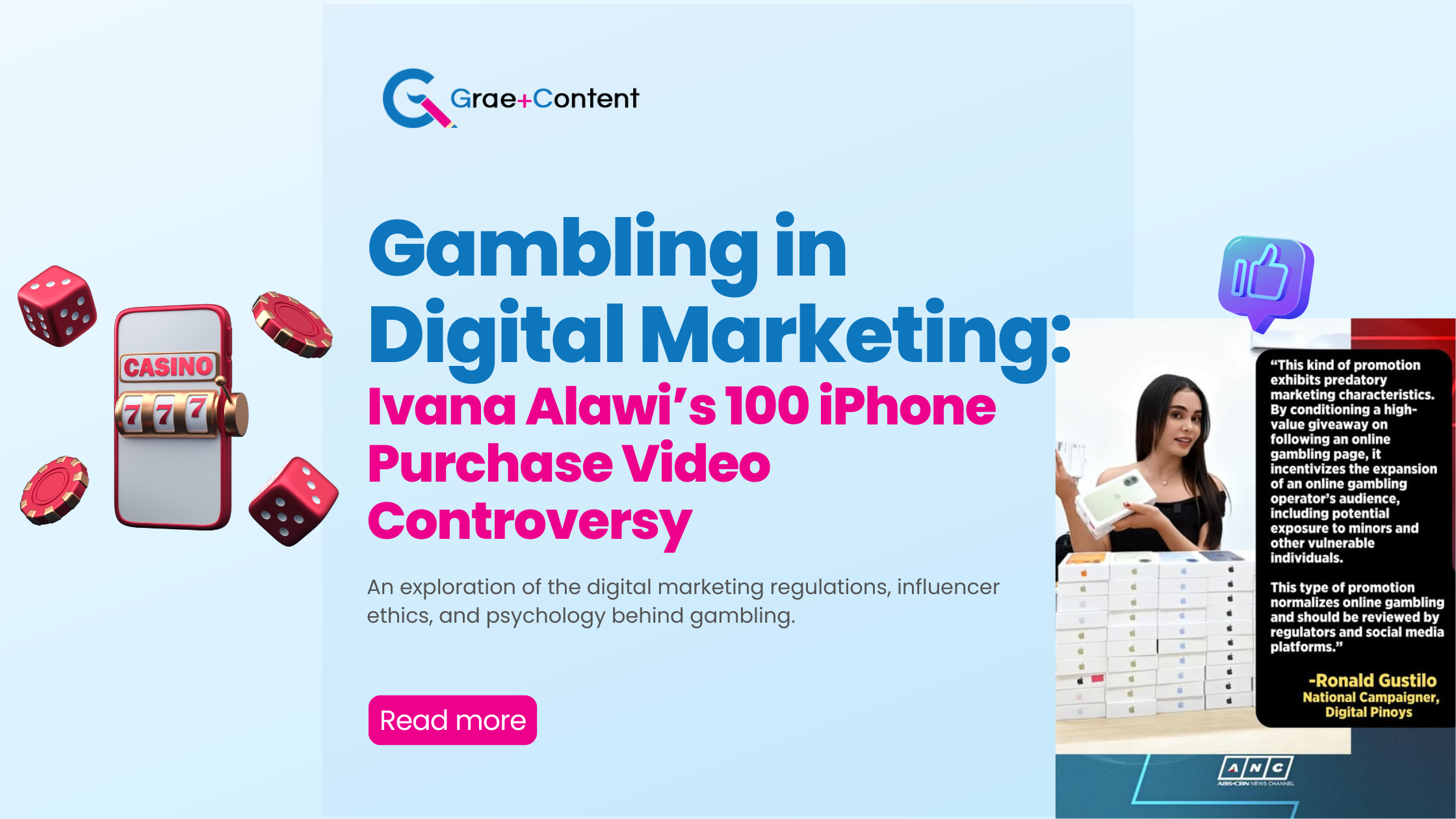
This post explores the issues surrounding the controversial 100-iPhone giveaway video by Ivana Alawi and the implications for influencer marketing, gambling advertising, and digital marketing ethics. Rather than focusing on personalities or public outrage, it examines the controversy through the lenses of advertising transparency, consumer protection, behavioral science, and regulation. It also examines current research on gambling behavior and how influencer promotions can shape public perception and consumer decision-making.
First of all, I just want to say that I love how the Ivana issue has suddenly pushed gambling to the forefront of Filipinos’ weekly cycle of distractions, a fresh topic to distract from the clownery of Philippine politics.
Naturally, as a poker writer and marketing professional, I’m going to join the conversation. Having traveled to countries with strict anti-gambling regulations as part of the poker tour media and having covered the historic Thai exhibition that established poker as a recognized sport, I think I can offer a perspective that’s a little different from the usual takes.
If you’re looking for a post on morality, ethics, or religion, you can check out what the influencers are saying on the subject. This is not the place.
In this blog post, I will be talking about the following:
The Premise
A three-and-a-half-minute video by Ivana Alawi on July 15, 2026 provoked widespread attention. In the video, Ivana documented herself purchasing 100 iPhones, paying approximately ₱4.3 million with her credit card. Ivana often vlogs herself purchasing large quantities of mobile phones for giveaways, using the shopping footage to probably establish the authenticity of the prizes and reinforce her reputation for delivering on her promises to followers.
However, unlike her typical phone-shopping videos, this one ended with an unusual call to action. She concluded by announcing that all 100 phones would be given away to her followers and thanked CP Fam for helping make the giveaway possible. She then instructed viewers to check the comments section for a link and explained that they would need to follow the CP Fam page, where random followers would be selected to receive the iPhones.

I often see three key arguments that are being put across:
Sneaky or Unethical Gambling Ad
The gist: Even if the mechanics of the iPhone giveaway are just to like a page, gambling has destroyed so many lives, and therefore, any marketing for such activities should be prohibited.
The counterargument: That is a policy issue. Take it up with the respective regulatory bodies.
The real issue is about how gambling advertising is regulated in the Philippines and the loopholes that allow it to reach audiences through influencer marketing.
Instead of explicitly saying, “This gambling site sponsored this giveaway,” the promotion is woven into content that already fits the creator’s brand, such as, “I’m buying 100 iPhones to give to my followers.” The advertisement becomes part of the entertainment rather than something viewers immediately recognize as gambling marketing.
Whether that practice should be allowed is ultimately a policy and regulatory question.
On August 15, 2025, PAGCOR and the Ad Standards Council (ASC) signed an agreement requiring all gambling advertisements to undergo ASC review and approval before release, including TV, radio, digital, and outdoor ads. Gambling ads have now been added to the ASC’s must-screen category, alongside regulated products such as alcohol and certain pharmaceutical products.
PAGCOR said it will only approve advertising that promotes institutional messaging or responsible gaming.
Basically, the law allows gambling messages in public spaces as long as there is a gamble responsibly or keep it fun message, which is the gambling equivalent of drink moderately.

However, Ivana never explicitly identified the video as a Casino Plus advertisement, so it doesn’t qualify as an ad. Instead, she presented CP Fam as the partner behind the giveaway and instructed viewers to follow its Facebook page as one of the mechanics for winning an iPhone. Because she never explained that CP Fam meant Casino Plus Family, the promotional aspect of the video was embedded in what otherwise appeared to be one of her usual giveaway vlogs, with the connection only becoming apparent after viewers clicked the link in the comments.
Influencer Ethics and Morality
The gist: Ivana Alawi should be a good example for the youth and not promote gambling on her platform, which has around 100 million followers/subscribers across all platforms.
Adding these together and not accounting for overlap between platforms:
- Facebook: ~48 million
- TikTok: ~22 million
- YouTube: ~21 million
- Instagram: ~11.6 million
Ivana Alawi has ~102.6 million followers/subscribers across her four largest platforms, not accounting for people who subscribe to her on more than one platform.
The counterargument: These are branding or brand management and audience issues.
Ivana Alawi started her content journey as a sexy creator with her first YouTube video in 2020, literally titled My Secret to Bigger Boobs. She gained popularity as a sexy star before she became a social media influencer.

Over the years, she has built her influencer following through a combination of collaborations with fellow celebrities, particularly her sister, who has her own showbiz career, and a steady stream of content that critics have described as poverty porn, in which charitable acts and giveaways to financially struggling individuals are heavily featured for entertainment and engagement.
The charity acts proved to be a double-edged sword.
Religious Audience
According to the 2020 Religious Affiliation in the Philippines census from the Philippine Statistics Authority, the Philippines is an overwhelmingly religious country. Approximately 93.5% of the population of 108,667,043 are Christian (around 78% are Roman Catholics), making Christianity by far the dominant religion in the country. Islam accounted for 6.4%. In contrast, only 0.04% reported having no religious affiliation, while 0.01% did not report their religion. Therefore, it’s safe to say that almost all Filipinos identify with some type of religion.

As her charitable content attracted a broader audience, her platform expanded beyond the demographic that initially followed her as a sexy star. She cultivated an image of being glamorous, compassionate and socially conscious. Beyond her giveaway videos, she has also built a reputation for prank content that rewards acts of kindness by giving money to unsuspecting Good Samaritans. As a result, her platform reinforces the idea that selflessness and generosity are rewarded.
In doing so, she attracted viewers who held her to a different set of ethical or religious expectations regarding the content she publishes and the endorsements she accepts.
Celebrity and Influencer
Aside from her status as a mainstream celebrity, Ivana Alawi is also a social media influencer. Unlike traditional celebrities, influencers cultivate ongoing, direct interactions with their audiences through personal updates, behind-the-scenes content, and everyday interactions. This environment fosters parasocial relationships or one-sided emotional bonds in which followers perceive the influencer as a trusted friend or someone they know personally.
As a result, endorsements from influencers often carry greater persuasive power than those of conventional celebrities because they are viewed as recommendations from a relatable and trusted figure rather than as standard advertisements.
Theoretically, had she maintained her original branding and audience, a gambling promotion would likely not have generated the same level of public backlash.
Gambling is Bad for the General Population
The gist: Basically an extension of the first point, gambling is bad and should not be supported or promoted.
The counterargument: Again, that is a policy issue. The Philippine government should decide on safeguards for people engaging in gambling.
Other than that, there’s not much I can say about that subject.
However, rather than relying solely on anecdotal accounts of gambling’s impact on families, which often dominate public discussions after controversies like this, let’s examine what the scientific literature says about gambling behavior and its consequences.

Relevant Gambling Facts Based on Research
The findings of A longitudinal study of gambling motives, problem gambling and need frustration and A Phenomenological Study of Online Gambling Behaviors Among Filipino Working Professionals converge on several important themes despite using different research designs. The former employed a longitudinal quantitative approach among Finnish adults, while the latter used qualitative interviews to examine the lived experiences of Filipino working professionals.
Both studies identify several common themes regarding the motivations, progression, and consequences of online gambling:
Primary Gambling Driver: Psychological Coping

Both studies found that gambling is frequently used as a coping mechanism for stress, negative emotions, and psychological distress. The Finnish longitudinal study identified escapism as the strongest predictor of future gambling problems.
At the same time, Filipino participants described gambling as a way to relieve stress, escape work pressures, cope with family conflict, and alleviate boredom.
As I mentioned in the first part of this post, the tendency to seek distraction or emotional escape from the country’s current challenges can make many Filipinos more vulnerable to gambling messages and promotions. This aligns with research showing that escapism is one of the strongest psychological motivations associated with problematic gambling behavior.
Financial Motivation
The quantitative study found that gambling for money independently predicted worsening gambling disorder, particularly among individuals experiencing psychological need frustration.
Similarly, Filipino participants frequently cited the possibility of winning big and improving their financial situation as a major motivation for gambling, especially during the economic uncertainty of the COVID-19 pandemic.
This aligns with the audience that is most responsive to incentives such as the opportunity to win or receive a free iPhone.
Online Accessibility Accelerates Gambling Behavior
Although emphasized more strongly in the Philippine study, both studies recognize that digital gambling environments facilitate gambling participation. The Finnish study acknowledged that online gambling environments contribute to gambling-related harm.
Meanwhile, Filipino participants highlighted the convenience of smartphones, 24/7 platform availability, and frictionless mobile payment systems such as GCash.

Consequently, gambling apps such as Scatter, along with other online casinos with low barriers to entry, can easily find their way into a person’s everyday phone use. For a more in-depth discussion of online gambling among students, Teach You a Lesson Episode 7 examines its prevalence and the serious consequences it can have on young people.
Problematic Gambling Develops Gradually
Both studies describe gambling as a behavior that escalates over time. The Finnish study statistically demonstrated that specific gambling motives predict increasing gambling severity.
Meanwhile, the Filipino participants described increasing bet sizes, more frequent gambling sessions, and repeated attempts to recover previous losses through chasing losses, illustrating the lived progression from recreational gambling to problematic behavior.
Therefore, regularly receiving gambling-related messages by following a gambling operator’s Facebook page can reinforce gambling behaviors, making the transition from recreational to problematic gaming more likely.
Gambling Produces Consequences Beyond Financial Losses
Both studies demonstrate that gambling harms extend to psychological, social, and occupational domains. The Finnish study linked gambling problems with unmet psychological needs, while Filipino participants reported depleted savings, emotional distress, family conflict, sleep deprivation, absenteeism, and reduced workplace productivity.
There have been cases in which family members have blamed online gambling apps such as Scatter for a loved one’s suicide. However, the available evidence does not support the conclusion that gambling alone causes suicide. Research suggests that problematic gambling is often associated with underlying psychological distress, including depression, anxiety, financial stress, and other mental health challenges.
In many cases, gambling may function as a maladaptive coping mechanism, similar to smoking or alcohol use, rather than the sole cause of a person’s death. Suicide is a complex, multifactorial outcome, and attributing it to gambling alone oversimplifies the interplay of psychological, social, and economic factors that contribute to suicide risk. I’ll leave it at that for now.
Address Underlying Motivations Rather than Gambling Behavior Alone
Both studies conclude that reducing gambling harm requires addressing the emotional, psychological, and environmental factors that sustain gambling. The Finnish researchers recommend helping individuals meet their psychological needs through healthier means.
More importantly, the Philippine study emphasizes stress management, supportive family relationships, reducing exposure to gambling triggers such as influencer promotions and advertisements, and integrating gambling-related support into workplace mental health programs.
Therefore, influencer promotions and gambling advertisements can be considered potential gambling triggers for vulnerable individuals. This reinforces the view that gambling is not simply an individual behavioral issue but a public health and societal concern that warrants broader regulatory and preventive interventions.

My Take on the Issue
So, what do I think about this issue? The controversy surrounding Ivana Alawi’s endorsement of Casino Plus does not appear to stem from the endorsement itself. Since Casino Plus is a PAGCOR-licensed online gaming operator, the stronger legal and ethical concerns center on advertising transparency.
Disguised Advertising and Sponsorship Disclosure
The campaign closely resembled one of Ivana’s regular giveaway vlogs, with the sponsor referred to only as CP Fam throughout the video. Viewers only learned that CP Fam was Casino Plus after following the link in the comments.
Because the video was presented like her usual philanthropic content rather than an obvious advertisement, regulators should examine whether the commercial nature of the content was sufficiently disclosed or whether it constituted disguised advertising.
Potentially Misleading Omission
Another concern is the omission of material information. While Ivana did not appear to make any false statements, the identity of the gambling operator was withheld until after viewers clicked through to the comments.
An ordinary viewer could reasonably believe they were watching another charitable giveaway instead of a promotional campaign for an online gambling platform. This raises questions about whether the omission affected how consumers perceived the content.
Native Advertising
The campaign also exhibited characteristics of native advertising, where promotional material is intentionally integrated into entertainment content. Rather than presenting Casino Plus through a conventional advertisement, the promotion was woven into one of Ivana’s most recognizable content formats of phone purchases. This blending of entertainment and marketing can make the commercial intent less obvious and could be a loophole for gambling-themed UGC or content.
Audience Composition
Ivana’s audience further complicates the issue. Unlike gambling influencers whose audiences primarily consist of adults interested in betting, her content reaches a broad mainstream audience that includes families, teenagers, and young adults.

Using a mass-market influencer with a reputation for giveaways and philanthropy to promote gambling may therefore attract greater regulatory attention because the message reaches audiences beyond those actively seeking gambling-related content.
Final Thoughts
I believe this marketing move was intentional. At no point in the video did Alawi identify CP Fam as Casino Plus, an online gambling platform. Most ads that mention gambling platforms must comply with regulatory guidelines and proper disclosure or messaging. Viewers only learned the sponsor’s identity after clicking the link she had posted in the comments, which redirected them to the Casino Plus Facebook page.
Rather than presenting the content as an explicit gambling advertisement from the outset, the promotion was embedded in one of her signature giveaway videos, requiring viewers to take an extra step before discovering that participation meant following a gambling operator’s social media page. The sponsorship was introduced indirectly through content that closely resembled her usual philanthropic giveaways.

Existing research consistently shows that gambling participation is influenced by psychological, social, and financial motivations, with influencer marketing and social media normalizing gambling and increasing engagement. Because influencers benefit from parasocial relationships, their endorsements can be considerably more persuasive than those of traditional celebrities, which places a greater ethical responsibility on influencers when promoting products associated with significant public health risks, such as online gambling.
Consequently, the debate surrounding Ivana Alawi reflects a broader policy question about how gambling advertising should be regulated at a time when entertainment content, philanthropy, and sponsored promotions can all coexist on the same platform.
Her following has also increased from 48 million to 51 million since the controversy (as of July 20, 2026), suggesting that the public backlash may not have translated into a decline in audience size. Instead, it raises the question of whether the controversy inadvertently amplified her visibility and reach.
I will, unironically, close this post with a referral link to GGPoker, a poker app. This is not sponsored.
Leave a Reply